
Home / Problems We Solve / Long power lines to inspect
IndustryPower line inspection by drone: check long lines without climbing
Transmission lines run for kilometres across difficult land, and climbing each tower is slow and risky.
How do drones inspect transmission lines?
Power lines cross farmland, hills and forests. Getting a team to every tower takes time, and a close look often means climbing.
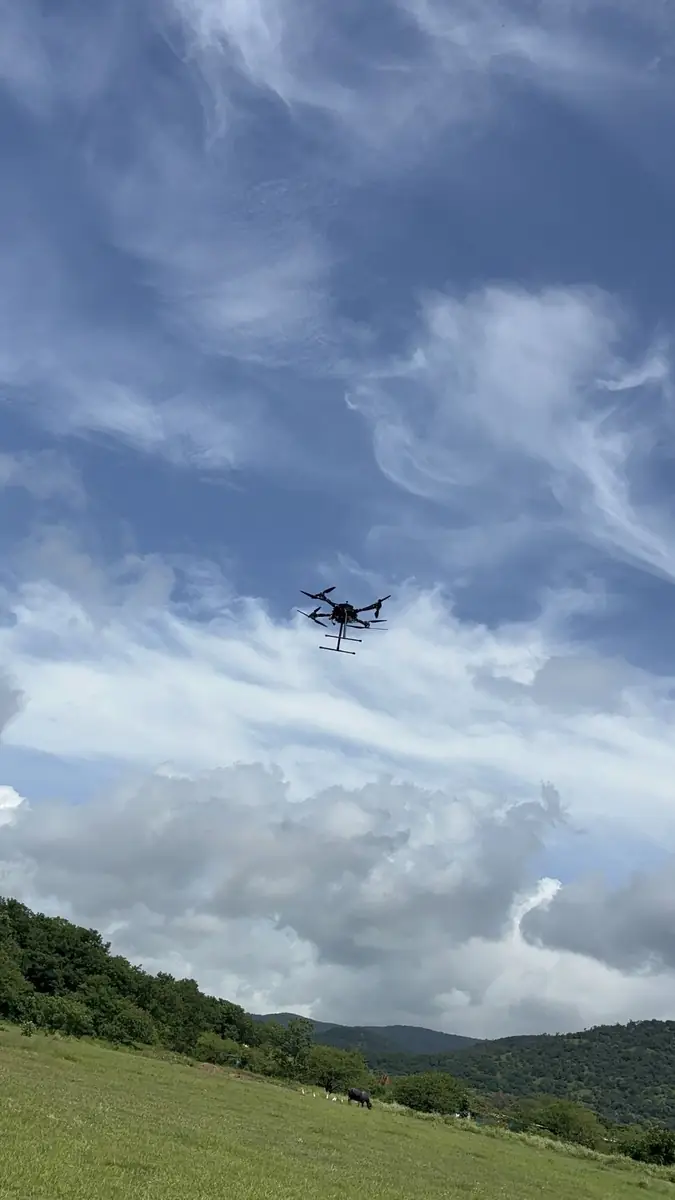
There are two common jobs. A long corridor flight records the condition of the route, while a hovering close-up looks at towers, insulators and joints.
That can call for two platforms: a VTOL fixed-wing for distance and a multirotor for detail. Keep safe distances from live lines and follow your utility’s procedures.
Signs you have this problem
- Line patrols take weeks to complete
- Close checks need climbing or outages
- Remote sections get inspected less often
- Thermal faults are found only after failure
What to look for
- Range for corridors, or hover for close checks
- Thermal and zoom cameras
- Stable flight near structures
- Reports that tie each defect to a tower
The main causes
Distance
Lines cover long stretches with few access roads.
Height
Close checks mean work at height near energised equipment.
Hidden heat
Failing joints may show heat before visible damage.
Before and after
How to solve it, step by step
- 1
Plan
Set a corridor mission along the line.
- 2
Fly
Capture visual and thermal images.
- 3
Report
Tag defects by tower and location.
- 4
Compare
Repeat flights to track changes.
Common questions
Is it safe to fly a drone near power lines?
It needs trained pilots, safe distances and your utility’s approval. Electromagnetic effects and wires are real hazards.
Should I use a fixed-wing or a multirotor?
Fixed-wing suits long corridors, and multirotors suit close inspection. Our VTOL vs multirotor guide compares them.
Can a drone inspect a live line?
One aim of drone inspection is to avoid shutdowns, but your utility’s safety rules decide what is permitted.
Related problems
Slow land surveys
Ground surveys are slow, hard over rough terrain, and only capture the points someone walked to.
Read moreRisky, slow inspections
Climbing a tower or shutting down an array just to inspect it is slow, costly and dangerous.
Read moreToo much drone video to watch
Long missions produce more footage than any team has time to review, so important details get missed.
Read moreFacing this problem?
Tell us about your mission and our engineers will suggest the right platform or configuration.